
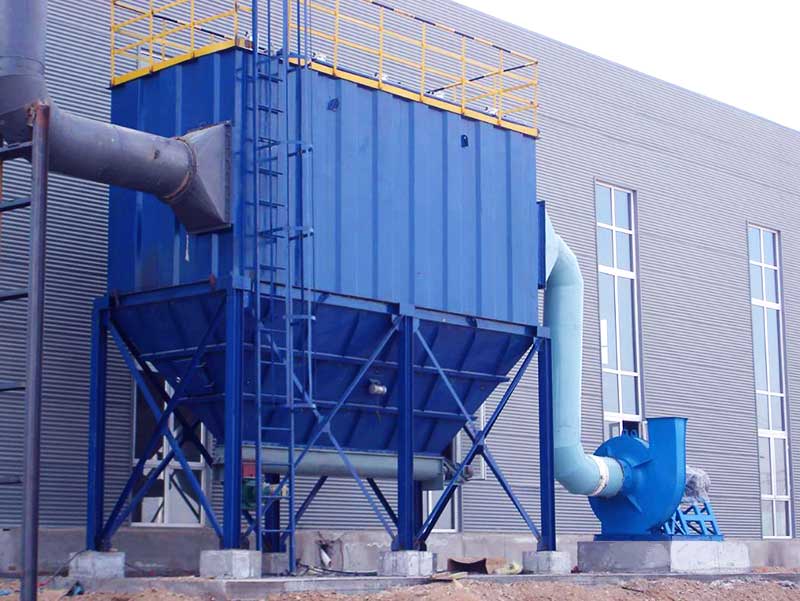
Industrial environments generate a large amount of dust, fumes, and airborne particles during manufacturing and production processes. Industries deploy advanced dust filtration systems like the Pulse Jet Bag House to effectively manage their indoor air quality and comply with environmental regulations. A pulse jet bag house is among the most efficient and widely deployed systems used for dust collection to remove dust particles from industrial air streams.
This blog is going to look at the pulse jet bag house – how it functions, the components, the benefits, the various applications, and the reasons a pulse jet bag filtration system is preferred by industries for air pollution control.
What is a Pulse Jet Bag House?
A Pulse Jet Bag House is an industrial air filtration system that is used to collect dust and particulate matter from the air or gas that is exhausted during processes in an industry. This system employs specialized filter bags that trap the dust particles and allow the clean air to pass through.
This system derives its name from the fact that a pulse of compressed air is used to dislodge dust from the filter bags, a process that is accomplished without interrupting the system’s operations. Because of this feature, the system is very well suited for operations that generate a huge amount of dust.
A pulse jet bag house is commonly installed in industries such as:
- Cement plants
- Steel industries
- Pharmaceutical industries
- Food processing units
- Chemical plants
- Woodworking industries
- Mining and metal processing units
How Does a Pulse Jet Bag House Work?
The working principle of a pulse jet bag house is simple yet highly effective. The system continuously filters dust-laden air and removes accumulated dust from the filter bags using compressed air pulses.
Step-by-Step Working Process
Dust-Laden Air Enters the System
The first step in the selection of the dust collection system is the ingress of the contaminated air that contains various dust particles into the system through the inlet duct.
Filtration Through Filter Bags
The next step involves the passage of the contaminated air through a number of filter bags that are positioned internally within the bag house. These bags are made of a fabric that, while allowing air to pass, captures the dust on the outer surface of the bags. Afterwards, the clean air then passes through the fabric.
Clean Air Release
Once the air has been filtered it is sent to the clean air chamber. From there it released into the atmosphere from an outlet.
Pulse Jet Cleaning Process
Once bag filters have been installed, dust will begin to collect on the bags and a dust cake will begin to form. To avoid a loss in efficiency due to a loss in airflow, at set intervals, compressed air is sent through blow pipes.
As these dust cakes build up, bags become less efficient at their function, and cleaning the bags will help the system to continue to function at peak operations.
Dust Collection
When dust from the bag filters is removed, the dust will collect at the bottom of the bag house in a hopper and ready to be removed and disposed or recycled.
Main Components of a Pulse Jet Bag Filter
A pulse jet bag filter consists of several important components that work together to ensure effective dust filtration.
Filter Bags
These are the primary filtering elements that capture dust particles from the air.
Bag Cage
Metal cages support the filter bags and prevent them from collapsing during operation.
Compressed Air System
Provides high-pressure air pulses for automatic bag cleaning.
Solenoid Valves
Control the release of compressed air into the filter bags.
Hopper
Collects dust removed from the filter bags.
Fan or Blower
Creates airflow and pulls contaminated air into the system.
Applications of Pulse Jet Dust Collection Systems
A dust collection system with pulse jet technology is widely used across multiple industries.
Cement Industry
Controls cement dust generated during grinding and packaging processes.
Metal Industry
Captures welding fumes, metal dust, and grinding particles.
Pharmaceutical Industry
Removes fine powder particles generated during production.
Food Processing Industry
Maintains hygiene by collecting flour, sugar, and spice dust.
Woodworking Industry
Collects sawdust and wood particles effectively.
Why Choose a Pulse Jet Bag Filter Over Other Dust Collection Systems?
Compared to conventional filtration systems, a pulse jet bag filter offers several advantages:
- Better filtration efficiency
- Continuous cleaning operation
- Lower downtime
- Reduced maintenance costs
- Longer filter life
- Suitable for high dust load applications
These features make pulse jet bag houses an ideal solution for modern industrial air pollution control.
Industries looking for efficient air pollution control systems can greatly benefit from installing a high-performance pulse jet bag house to ensure cleaner operations, worker safety, and long-term productivity.
For more information about industrial dust collection and air filtration solutions, visit CK Airtech
Recent Comments